Your company has a detailed plan for maintaining every piece of equipment on your floor. You schedule it, budget for it, and treat it like a non-negotiable. But the people who oversee the operation of that equipment? They get nothing. Here's why that has to change — and what it costs you every single day that it doesn't.
Your company takes better care of its machines than it does its people.
I know that lands hard. You might want to push back on it. But stay with me for a minute.
Walk your floor or your field site and look at what has a maintenance plan. Your equipment. Your vehicles. Your tools. Anything mechanical has a schedule — inspections, upgrades, lubrication, replacement parts on standby. When something breaks down, the whole system responds. The part comes out of service. It gets repaired or replaced. It gets tested. It doesn't go back into service until someone is confident it's running right again.
Now think about your frontline supervisors.
What is their maintenance plan? When do they get their scheduled upgrades? When was the last time someone checked whether their leadership skills were still running at full capacity — or whether they'd been quietly grinding themselves down for years with no support, no development, and no one asking if they were okay?
The Rock Star Who Got Left Alone
I've spent over 25 years working with frontline supervisors. I've sat in rooms with them. I've heard their frustration. And one thing I've seen over and over again disappoints me every single time.
These are good people. Really good people. Most of them were the best at what they did before they got promoted. They were the rock stars — the ones their company pointed to and said, "Be more like that person." And then came the promotion. And with it came the expectation that being great at the job automatically makes you great at leading people. It doesn't. It never did. And the supervisor is often the last one to know that what made them excellent before is not what makes them excellent now.
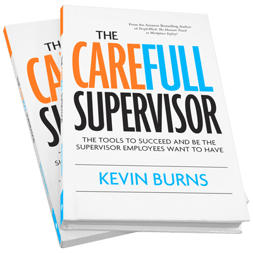
In The CareFull Supervisor, I wrote about this directly: "You've been set up to fail. Not purposely, of course. You can't think for a moment that your bosses would put you in a supervisor's position and then want you to fail. But you can't ignore something and expect it to magically improve."
That's the quiet truth that nobody talks about at the leadership table.
The supervisor standing on your floor right now — the one trying to manage a team of 12 people, deal with a production target, handle a conflict between two team members, and still make it home without feeling like they failed everyone — that person is almost certainly running on whatever instincts they arrived with. Because no one gave them anything else.
No coaching. No development. No skills for the part of the job that actually matters most — the human part.
Every Number You Measure Goes Through Them
Here's what that costs you. Not in the abstract. In the real numbers you look at every week.
Your safety incident rate. Your productivity numbers. Your employee turnover. Your quality defects. Your absenteeism. Your engagement scores. Your on-time delivery. Your near-miss reports. Your new hire retention in the first 90 days. Your shift transition effectiveness.
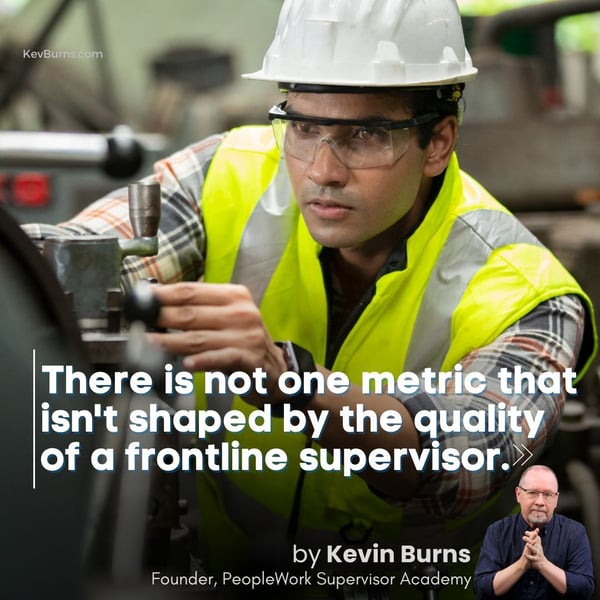
There is not one metric on that list — not a single one — that isn't shaped by the quality of your frontline supervisor's relationships with their team. Not one. The supervisor is the hinge that everything else swings on. When that hinge is strong, things move well. When it's worn down and rusty from years of neglect, everything sticks.
And yet we keep acting like supervisors should just figure it out.
Run the Real Math
I understand why. The pressure on production is real. Training budgets are tight. Taking someone off the floor feels expensive. But here's the math that never gets run: What does it cost you when a supervisor's team has 20% higher turnover than other teams? What does an incident cost you — not just in direct dollars but in the knock-on effects to morale, to trust, to the team members who watched it happen? What does a disengaged team cost you in lost productivity every single shift, month after month?
The equipment gets maintained because someone did that math a long time ago and decided that planned maintenance is always cheaper than unplanned breakdown. That logic is exactly right. And it applies to the people who run that equipment every bit as much as it applies to the equipment itself.
What Your Supervisor Carries Home Every Night
Your frontline supervisor goes home at the end of every shift carrying the weight of your entire operation. They carry what went wrong. They carry what they didn't know how to handle. They carry the conversation they avoided because no one ever showed them how to have it. And they show up the next day and carry it all again.
That's not a machine problem. That's a people problem. And it deserves a people solution.
At PeopleWork Supervisor Academy, we've developed a practical, real-world program built specifically for frontline supervisors in industrial settings. It doesn't take them off the floor for weeks. It doesn't bury them in binders they'll never open again. It gives them the leadership skills, the relationship tools, and the confidence to do the part of the job that actually drives every number you measure.
Over a thousand supervisors have come through this program. And every single time, the company that brought us in was surprised by one thing: how much their supervisors wanted this. How hungry they were for it. How long they'd been waiting for someone to invest in them the way they'd been asked to invest in everyone else.
So go back to the question in the title of this post. Are you maintaining your equipment better than your supervisors? If the honest answer is yes — and for most companies it is — then you already know what needs to change. Your machines get the attention they need because you've decided breakdowns are too costly to risk. The person carrying your entire operation on their shoulders every single shift deserves at least the same.
The maintenance plan for your supervisors starts now.