The safety program doesn't build a safety culture. Only your supervisors can do that. And they can only do it when they have the right foundation. Here are the four pillars that make the difference.
The safety program does not build your safety culture. Your supervisors do. And if your supervisors do not have the right foundation, no program in the world will close that gap. Safety culture will seem like a moving target.
Companies invest heavily in safety systems, compliance processes, and incident reporting. Of course, those things matter. But they are not culture.
Systems and processes are the “how.” Culture is the “why” of what you do. It is the default setting of the people on the floor. And that default setting is shaped entirely by the relationship between each team member and their frontline supervisor.
So, the question is not whether the safety program is strong enough. The question is whether or not your supervisors have the foundation they need to build that culture.
In our work with supervisors through the PeopleWork Supervisor Academy, we have identified four pillars that every supervisor needs. Not just new supervisors. But every supervisor, at every stage of their career.
Here they are.
Pillar One: The Mindset Shift
Because supervisors walk into their roles with little in the way of skills development, the default thinking is that their job is to look like they are in charge. They think that they’re supposed to project authority because, hey, isn’t that what leadership looks like? And it might work for a bit until they actually have to lead the very people who were their peers last week, or until they face a team member who is struggling, or until a situation arises that rules and procedures cannot solve.
You’re not playing the part of a supervisor in a community theater production.
Instead, the mindset that actually builds safety culture is the opposite of “looking supervisory.”
The mindset is: Your team does not work for you. You work for them. Your job is to set every one of your team members up for success.
When a supervisor shifts from authority to serving their team, everything changes.
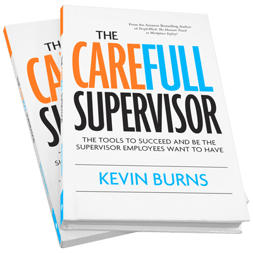
As I write in The CareFull Supervisor, a supervisor has two choices: you can be feared, or you can be trusted. You cannot be both. People do not trust those they fear, and they do not fear those they trust.
A supervisor who is trying to look like they are in charge is usually chasing fear. A supervisor who has made the shift to serving their team is earning trust. And trust is the only soil that safety culture can grow in.
Pillar Two: Find the Person Who Needs Help Most of All and Go Help Them
Once the mindset is right, then the work begins. And the first job of a coaching supervisor is to identify the one person on your team who needs your help most of all right now. And make a plan to go give them the help they need.
Repeat this practice every single day.
This is about building people. When a supervisor does this consistently every single day, something remarkable happens. It gets harder and harder to find someone who needs help.
The team grows more capable, more confident, and more connected to each other. That connection is the foundation of a strong safety culture. Teams that trust each other look out for each other. And teams that look out for each other do not default to speed when the pressure is on. They default to safety.
Pillar Three: Get Out of Your Office and Into Theirs
Forget your open-door policy. An open-door policy is lazy. Just because your last boss said they had an open-door policy doesn’t make it right. Your people shouldn’t have to track you down to talk to you.
Waiting for them to come to you means your team members have to walk away from their work, cross the floor, and knock on your door. No matter how old you get, that walk feels like a trip to the principal's office every single time. Your people will avoid it, and any issues that could have been caught early will quietly grow.
Your office is not where safety culture gets built. Their workspace is. Get out among your team. Notice what they are doing. Engage them where they are relaxed and comfortable and more willing to talk openly. There is no us and them. There is only us.
When a supervisor shows up consistently in the field or on the floor, the message is clear: you matter, your work matters, and I am here because this team is my priority. That message builds the kind of trust that makes safety personal.

Pillar Four: Make the First Part of Every Morning Your Team's Time
Before you answer a single email. Before you jump into your admin paperwork. Before the day pulls you in six directions, your team gets the first part of your morning. Every day.
Use that first-thing-in-the-morning time to set them up for success. Share what needs to be accomplished. Get their buy-in on the mission for the day. Set milestones that are attainable so that tomorrow morning you can start by celebrating what the team achieved yesterday.
Every once in a while, bring donuts. Bring breakfast sandwiches. Make the wins visible. People remember being recognized far longer than they remember the work itself.
As a side benefit, this habit also keeps safety from becoming an afterthought. When the morning starts with clear goals, shared expectations, and a supervisor who is present and invested, safety is built into the day from the start. It is not something that gets bolted on after the fact.
The Foundation That Changes Everything
These four pillars are not complicated. But they are rare. Most supervisors were never taught them. They were handed a radio and a set of procedures and left to figure out leadership the hard way, through two years of trial and error at the expense of their team.
At the PeopleWork Supervisor Academy, these four pillars are the foundation of everything we teach. More than 1,000 supervisors across industrial operations have built their leadership on these pillars, and the organizations they work for have seen the results in every metric that matters. Not just safety. Turnover, engagement, productivity, and quality all move in the right direction when supervisors have the right foundation.
The safety program might tell your team how to do it. But only a supervisor with the right foundation can make them want to do it.
Give your supervisors these four pillars, and safety culture stops being something you chase and starts being something your team builds.
This Week's New Video Release: 7 Reasons Your Supervisors Struggle (And the One Thing That Fixes It)
Operations leaders and safety professionals: You promoted your best team member to supervisor. They knew the work, showed up on time, got along with the crew. But nobody prepared them for the hardest social and emotional transition they'll ever face.
Every underperforming metric — safety, turnover, productivity, quality, engagement, training ROI, change adoption — connects back to supervisors who were left to lead without foundational skills.
This isn't the technical skills gap. This is the skills gap nobody's addressing. And there's one thing that fixes it.