Turnover. Absenteeism. Rework. Near misses. Grievances. Quality issues. Up to 12 important metrics that matter to your success. And there are problems with every one of them at some point.
Seven out of eight people don't believe their employers care about them. That's not a soft number. That's the statistic that convinced the CEO of a $3.3 billion company to write a book about it. And the same problem is sitting inside your operation right now. Here's the part nobody in your industry talks about: the word "care" makes senior managers nervous. Say it in a safety meeting and watch the room tighten up. Suddenly everyone's worried they're going to have to look each other in the eyes and talk about their feelings. But you already feel it instantly when someone doesn't care. About you, about the work, about anything. It makes you bristle. So why are we pretending care has no place on the floor? In this week's video, I get into what care actually is. And it's not soft, it's not touchy-feely, and it's not optional. I also get into the three kinds of care every CareFull Supervisor brings to the job. And why the one kind that gets left out of every training program is the one that moves every metric you measure.
There's a high cost of personal relationships you're asking a newly promoted supervisor to give up, but you're not compensating them for it. And it may be the one thing that costs you the most in productivity, safety, and engagement.
Almost every operation has said it at some point. It's probably on a poster in the break room. It gets implied in the Monday meeting, in the safety huddle, in the onboarding package. We're like a family here.
The safety program doesn't build a safety culture. Only your supervisors can do that. And they can only do it when they have the right foundation. Here are the four pillars that make the difference.
Most companies treat safety culture like it is its own separate problem. It is not. It rises and falls with every metric on your dashboard. And every one of those metrics has the same root cause.
Frontline supervisors want to succeed — but they can't do it without their employer. Here are five things your supervisors actually need from you to build stronger teams, better safety culture, and more consistent production.
You can't build a safety culture by only focusing on safety. Here's the leadership problem that's driving your incident rate, AND turnover, AND productivity, AND engagement, AND a dozen other problems ... including safety.
The safety industry insists that a strong safety culture requires senior management support. This belief has become the favorite excuse for poor frontline performance. The truth is, supervisors create a culture through daily relationships with their crews, not through executive endorsements or corporate policies. The supervisor IS the culture for their crew. Companies that equip supervisors with relationship skills get the safety culture they want, regardless of how visible senior management support appears to be.
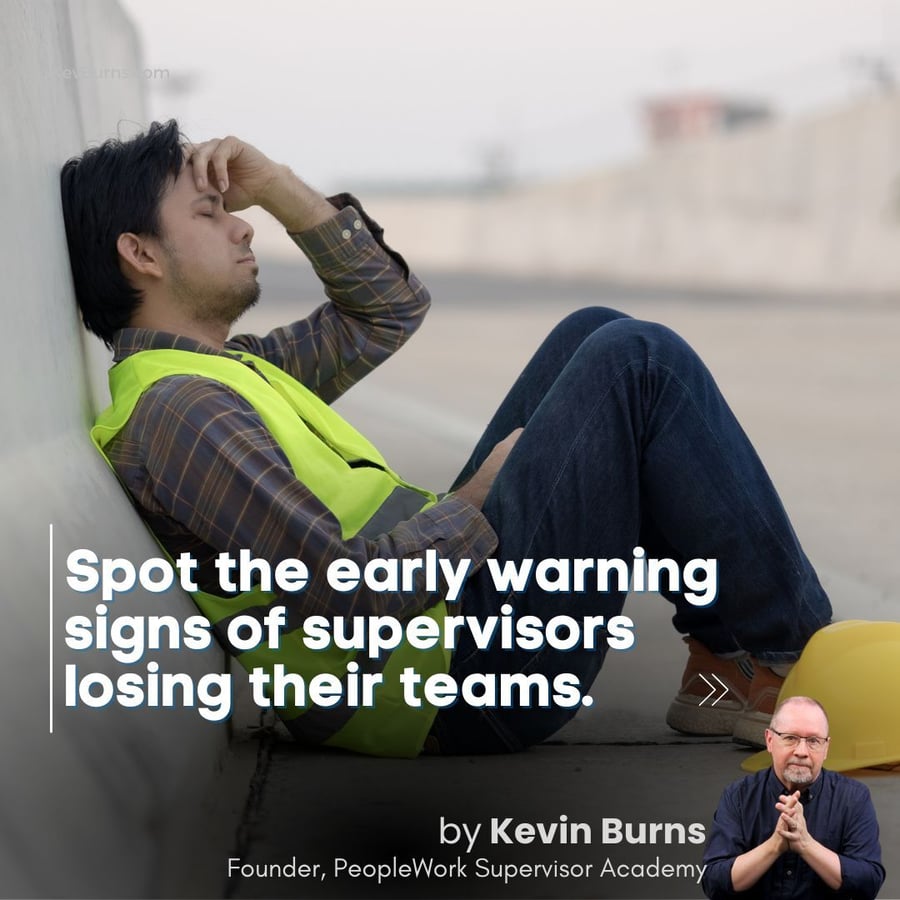
Your supervisors might be losing their teams right now, and you'd never know it. The breakdown doesn't happen with dramatic confrontations - it happens gradually through subtle changes in conversations, engagement, and team dynamics. By the time people openly resist or complain, the damage is done. Learn to recognize the early warning signs of relationship deterioration and how to coach your supervisors to fix small problems before they become major trust issues.