Your supervisors work hard. No one is questioning that. But hard work and effective leadership are two different things, and confusing them is costing your operation. This post breaks down the gap between a busy supervisor and an effective one, and what it takes to close it.
There's a difference. And most supervisors don't know which one they are.

A busy supervisor and an effective supervisor are not the same thing. And mixing them up is one of the most expensive mistakes an industrial operation can make.
Here's something most supervisors won't tell you.
They spend their whole day doing things. Fixing problems. Answering questions. Putting out fires. Moving from one urgent thing to the next. They go home tired. They feel like they worked hard.
And they did. That's not in question.
The question is whether any of it actually moved the team forward.
Because there's a difference between a busy supervisor and an effective one.
And the gap between those two things is costing companies more than most senior leaders realize.
The Gunslinger Problem
Most supervisors were promoted because they were the best at the technical work. They knew the job. They could fix anything.
When something went wrong, they'd step in, handle it, and move on.
That skill, the ability to solve problems quickly, is exactly what made them valuable as frontline team members. And it's exactly what also holds them back as supervisors.
When a supervisor fixes every problem themselves, two things happen. First, their team never learns to solve problems on their own. Second, the supervisor becomes the bottleneck. Every question, every decision, and every issue flows through one person.
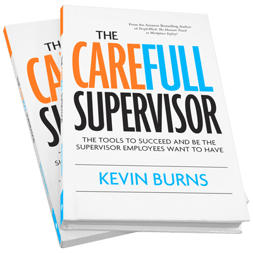
In The CareFull Supervisor, I put it this way: "As a supervisor, you are not a gunslinger. It's not you against the world. Get out of that mindset. Solving problems that you may be inadvertently creating doesn't show off your competence. It proves your incompetence."
That's a hard thing to hear. But it's true.
The supervisor who is always solving is the same supervisor whose team never grows. The team waits. The supervisor runs. And the whole operation spins in place.
The Shift That Changes Everything
The move from busy to effective starts with one change: from fixing to coaching.
Instead of solving the problem, walk your team member through it. Ask them what they think the answer is. Let them work it out with you there beside them. It takes a little longer the first time. The second time that issue comes up, they don't need you.
That's what building a team actually looks like.
Coaches don't get the wins. They set their players up to get them.
That one mindset shift changes how every hour of the day gets spent. The supervisor who coaches builds a team that gets stronger. The supervisor who fixes builds a team that stays helpless.
Which one do you have right now?
The Why Behind the What
Here's another gap that shows up constantly in industrial supervision.
A supervisor tells their team what to do. The team does it, or doesn't, or does it wrong, or asks fifteen follow-up questions. The supervisor gets frustrated. The team feels like they're always missing something.
The missing piece is almost always the why.
When a supervisor takes sixty seconds to explain the reasoning behind a task, why it matters, what it connects to, what happens if it's done wrong, something shifts.
People do better work when they understand the purpose behind it. They make better decisions when they hit unexpected situations. They ask fewer questions because they already have the context they need.
Telling people what to do is a shortcut that creates more work. Explaining the why takes a little longer and saves time every day that follows.
Your team isn't looking for a rule book. They're looking for a reason. Give them one.
The Difference Between Looking Busy and Being Effective
A supervisor who is reactive, always fixing, always answering, always in the middle of the problem, will always look busy. Their calendar is full. Their day is packed. Their team can't function without them.
That's not effectiveness. That's a system that depends entirely on one person.
An effective supervisor builds a team that can operate without needing the supervisor to be the answer to every problem. They coach instead of fix. They explain instead of just direct. They connect with each person individually so they know what each team member needs before the day goes sideways.
The result is a team that runs better. Not because the supervisor is doing more, but because the supervisor has built up the people around them to do more.
That is the job. That is what effectiveness actually looks like.
Would You Like to Fix These Issues?
Yes, you can fix them. But first you need to know what you're actually fixing.
The issues in this post are not effort problems. Your supervisors are already working hard. They are skill problems. The skills of coaching instead of fixing. The skill of explaining the why. The skill of connecting with each team member before the day falls apart.
These are learnable skills. But somebody has to teach them.
That's the question every operations manager faces before investing in supervisor training: will this actually work for my operation? Is this the right fit? And is it worth the commitment?
Our free 6-day trial of PeopleWork Supervisor Core Essentials was built to answer those questions before you spend a dollar.
Here's how it works. Each day for six days, you receive one short video lesson and one workbook page.
These are the first six actual lessons from the full program. Not a highlights reel. Not a sales pitch. The real thing.
Each lesson takes under ten minutes. One idea per day, so you can evaluate the content, the approach, and the model before the next one arrives.
By the end of day six, you'll know exactly what the learning looks like, whether the approach fits your people, and whether this is the program that closes the gap between busy and effective in your operation.
That's the problem the trial solves. Not "should I buy a training program." But "is this the right one for my people."
Find out for free.