Here are three compelling arguments for choosing safety. Call it the “Diesel Strategy” because it is powerful and goes a long distance. The safety department complains that it’s difficult to get workers to buy-in to safety. Employees resist buying-in to a program of checks, forms and paperwork.
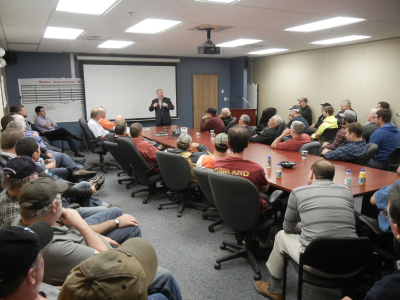
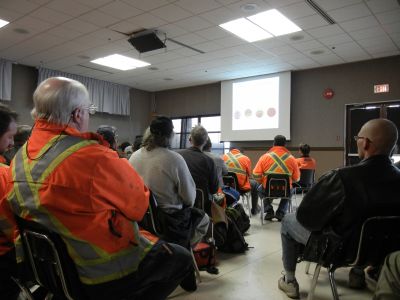
The best safety meetings have both conviction and experience. The safety meeting is far too important to hand off to an inexperienced person and hope that it goes OK. Can employees lead the safety meeting? It is an idea that hopes to lead to increased engagement. The thinking is that if a new voice speaks, people will listen. If a staffer leads the meeting, then others will engage better. It might be true. But there is a stronger case for not putting the responsibility onto employees.
A team focused on winning a championship will outplay the team focused on avoiding penalties. I received an email this week from a safety adviser whose company has the right safety systems in place. Company management is strong and committed and there is a concentrated presence on the company’s job sites. But, the Occupational Health & Safety inspectors still find infractions? The question was: what is it that the inspectors are seeing and why can’t the company see it first?
Being in a position of authority doesn’t automatically make you a leader. Your safety management positon doesn't automatically elevate you. Managers, who have no self-confidence about their abilities, cling to the rules. The reason for that is simple: the rules are always on your side and when you stick to the rules, you will always be right. That's why safety meetings cling to the rules, the statistics and the reports; they are irrefutable. They are proof. They are results. By clinging to the rules and statistics, there is no room for employees to challenge the person delivering them.
Improve the individuals and the organization as a whole gets better. Improve personal skills and the collective safety culture improves. Safety meetings, should solve problems and make the organization better. They are not meant to bore, to disengage or to frustrate. But they do. Meetings don’t have to entertain. But there is nothing wrong with entertaining employees and making work fun, even safety. Fun meetings engage employees and increase uptake.
Do you want your people fearing for their safety? Or would you rather have them feeling confident and supported in their safe choices? The notice read: “An inspirational keynote speech preferably from someone who's had an accident. A leave-behind message to always be mindful and follow procedures. A flat fee of $(cheap). No phone calls please.”
Safety is a commitment to your people that their contribution matters and is worth protecting. Safety managers complain that they have difficulty in getting safety buy-in from senior management. Senior management seems more prepared to roll the dice on safety by under-funding the safety program. Executives understand profit and loss. But maybe they’ve never had safety explained in a way they understand. Maybe the pitch has been all wrong.
You need to get down to what matters in safety meetings: talking WITH your people - not AT them. Safety is about preparedness - yet the safety meeting does not meet that standard. All too often, safety meetings get thrown together at the last minute. This does not inspire confidence from employees.
The high-performance, respected safety managers of tomorrow must improve in three key areas today. Safety managers, safety supervisors, safety officers, safety advisers, safety personnel, foremen, crew chiefs, human resources personnel - it doesn’t matter the title. If you have a hand in managing the company safety program, you are a safety manager (one who manages).
Young workers don’t know what they don’t know about safety. If they’re worth hiring, they’re worth protecting. I had a conversation with a young worker this week and was astounded how he was unaware of his rights, duties and obligations to safety. His admitted risky safety behaviors on the job made me cringe - not to mention his girlfriend who sat next to him.