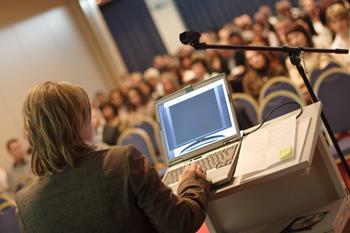
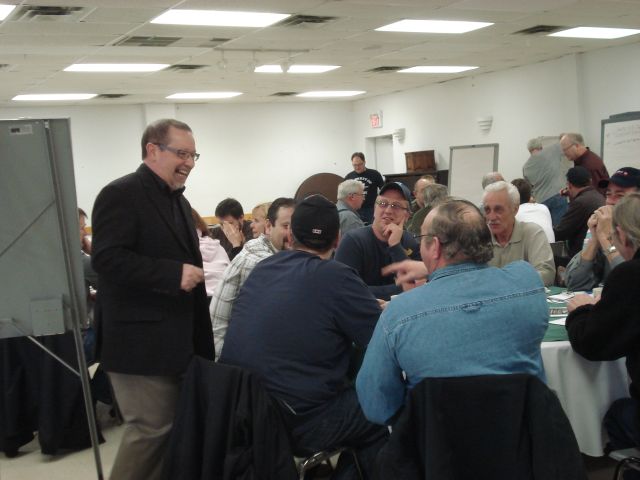
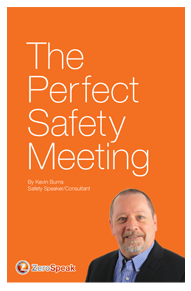
Safety meetings are NOT about filling time. They are about ensuring that you engage your attendees in safety and help them to make better choices. (An excerpt from my free e-book, The Perfect Safety Meeting)
Safety attitude doesn’t come from compliance. Safety attitude comes from aligning the safety program with a worker's personal values. After delivering a safety keynote presentation, I spotted a driver in treacherous, icy winter driving conditions fly through a yellow light with vehicle windows, side mirrors and tail lights completely obscured by snow. Upon parking, the driver, a construction worker, emerged from his vehicle in full PPE prepared for a full day of working safely.
Safety is not a discussion of logic. People don’t choose to be unsafe logically. They do it illogically. I got my start as a professional speaker very early on. I entered radio when I was fourteen years old; my father owned a small-town radio station. Some refer to radio as the media. But radio is only a part of media as is television, newspaper, bus benches, billboards, Yellow Pages and on the list goes.
Video creates a public record of your safety meeting, aids investigations, removes ambiguity and makes a safety meeting rock solid. Last week, while preparing to deliver a safety keynote presentation, I was testing the rented cordless lapel microphone at a community hall. My client was hosting their Safety Awards Banquet that night, and I had been chosen as the keynote speaker. The HSE Manager suggested that perhaps they should buy a microphone system like the one I was testing because it was so compact. It would allow them to have some flexibility in their safety meetings by not always having to seek out a vendor to rent A/V equipment from.
If you can get your people to be courteous to each other, you can get them to improve safety at the same time. My travel takes me to the four corners of the North American continent as a safety attitude and safety management speaker. I get to witness, first-hand, some of the best and some of the worst safety behaviors - but none more prevalent than that of drivers.
Until you start addressing the underlying attitudes of your people, you will always struggle with compliance, behaviors and communication. This week, here in Calgary, we experienced our first blizzard of the season. It’s not winter yet but we have experienced plenty of blowing and drifting snow. My three appointments on Monday all got canceled. No one wanted to venture out. Can’t say I blame them. I am an Alberta Safety Speaker. Be safe right?
Any safety meeting, large or small, must start with two basic purposes: to get your employees’ attention and their participation. My newest book (in e-Book format), The Perfect Safety Meeting, is being downloaded around the world. Since safety never seems to get a big budget for learning and development, I made the e-Book free.
When you tweak job performance in small chunks, little by little, safety performance improves. Back in a former lifetime (20 years ago), I made my living as a radio announcer. Radio is a cut-throat game that depends on ratings. Take a tumble in the ratings and you can start looking for another job. To stay on top in the ratings requires constant monitoring, adjustment and improvement. That means weekly airchecks.
Safety Meeting attendees think the meetings are boring because it seems no one cares enough to put them together well. "The Perfect Safety Meeting" webinar (based on my new book of the same name) on November 13, 2013 had over 750 registrations from safety professionals in 18 countries, 42 US states and all ten Canadian provinces. It is apparent that a lot of people working in safety management and supervision want to get a lot better at running safety meetings. On the other side, there are probably a lot more employees who are hoping that their safety people get better at safety meetings.
In safety, there is a mistaken belief that in order to motivate employees to buy-in, you have to “go negative.” The focus of safety marketing has been wrong. How do scare tactics, gruesome photos and videos and data and charts provide inspiration, motivation and encouragement to buy-in to safety directly?