Before you plan your next safety meeting, ask yourself if your intent is to scare your workers into compliance. Do you want them to be afraid, or to get them to voluntarily buy-in to safety as a personal value?
Accidents don't happen in the safety manager's office. They happen in the field. That's where the management of safety must take place. High safety performance doesn't magically come about in organized safety meetings, although good safety meetings are part of the solution. Safety performance happens when you deal with safety issues, decisions and behaviors one on one.
When marketing of safety goes up, safety-incident numbers go down. Plain and simple, this works. Raise awareness of safety, sell the idea of safety and you will increase safety results. People choose safety when asked to.
Just because they wear safety gear doesn't mean they will choose safety in every moment. Do not confuse an employee's willingness to abide by safety rules as proof that they accept safety as a personal value. Just because they have never had an incident doesn't mean they choose to buy-in to safety.
Senior managers who only want to put in an appearance at safety meetings should just stay away. Senior managers can't just show up halfway through a safety meeting, glad-hand a bit and then leave in favour of a meeting that is supposedly "more important." If safety is not the most important meeting for senior managers, then it sends a terrible message to employees.
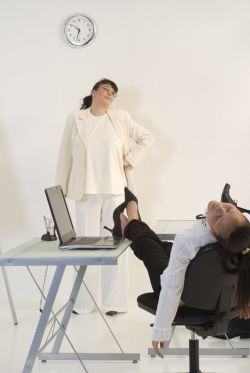
If safety meetings are not fun or engaging for attendees, they won’t remember it. Part of the overall strategy for safety communication and meetings should be a requirement to avoid mind-numbing and boring your people whenever possible. But that's tough when the subject-matter and even worse, the presenters, are boring. You make it so much more difficult for employees to engage and stay sharp if you insist on throwing every boring statistic, figure, graph and performance chart that you can lay your hands on at them in one meeting - and expecting any level of recall. Boring presenters are not born - they are made by the example of those boring presenters who they've observed. Over time, bad meetings evolve into something worse by exposure to mind-numbing safety meetings featuring a parade of PowerPoint armed, personality-deficient robots.
Never in history have there been more safety professionals in the workplace. Never in history have there ever been more certifications in safety. Never in history have the rules of the OH&S Act had more teeth. And yet, workplace incident numbers continue to rise. And there is a reason.
Engagement is the biggest problem in the workplace today. The surveys tell us that 71% of employees are NOT fully engaged. And it's not just Gen Y - they only account for 15% of the workforce forcing you to explain the other 56% to make it add up to 71. Stop kidding yourself. The problem is not just young workers.
Advertising is a one-way street: outward. It talks at us not with us. Memos and surveys at work are one-way communication. There is no conversation. There is no engagement. Because to build engagement, especially in safety, requires a relationship.