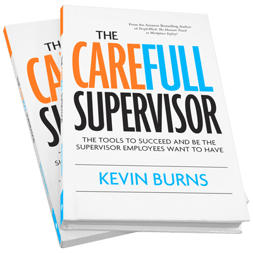
Seven out of eight people don't believe their employers care about them. That's not a soft number. That's the statistic that convinced the CEO of a $3.3 billion company to write a book about it. And the same problem is sitting inside your operation right now. Here's the part nobody in your industry talks about: the word "care" makes senior managers nervous. Say it in a safety meeting and watch the room tighten up. Suddenly everyone's worried they're going to have to look each other in the eyes and talk about their feelings. But you already feel it instantly when someone doesn't care. About you, about the work, about anything. It makes you bristle. So why are we pretending care has no place on the floor? In this week's video, I get into what care actually is. And it's not soft, it's not touchy-feely, and it's not optional. I also get into the three kinds of care every CareFull Supervisor brings to the job. And why the one kind that gets left out of every training program is the one that moves every metric you measure.